
Climate policy starts with reducing our emissions; otherwise, it's like mopping with the tap running. Everyone has a personal responsibility in this. At the same time, even with a reduction in global emissions, the CO₂ concentration continues to rise. Additionally, during the transition period, we remain dependent on fossil products without a good alternative. We must at least compensate that (residual) emission with high-quality CO₂ removal techniques and credits.
CO₂ removal has long been seen as a solution for remaining emissions, but we can no longer afford the luxury of waiting. We need to build a mature CO₂ removal market now, as a complement to reducing emissions. By investing in it now, we help technologies to grow, improve, and innovate.
When CO₂ removal comes from voluntary contributions of a collectively activated citizenry, it is a powerful signal of social support for necessary policy measures and systemic change. It shows that many people are concerned about the global climate impact and are taking personal responsibility, which helps to break the deadlock and effectively encourages long-term policy.
This is how we, with the CO₂llectief, create shared, lasting impact and perspective, precisely at the moment when this is desperately needed.


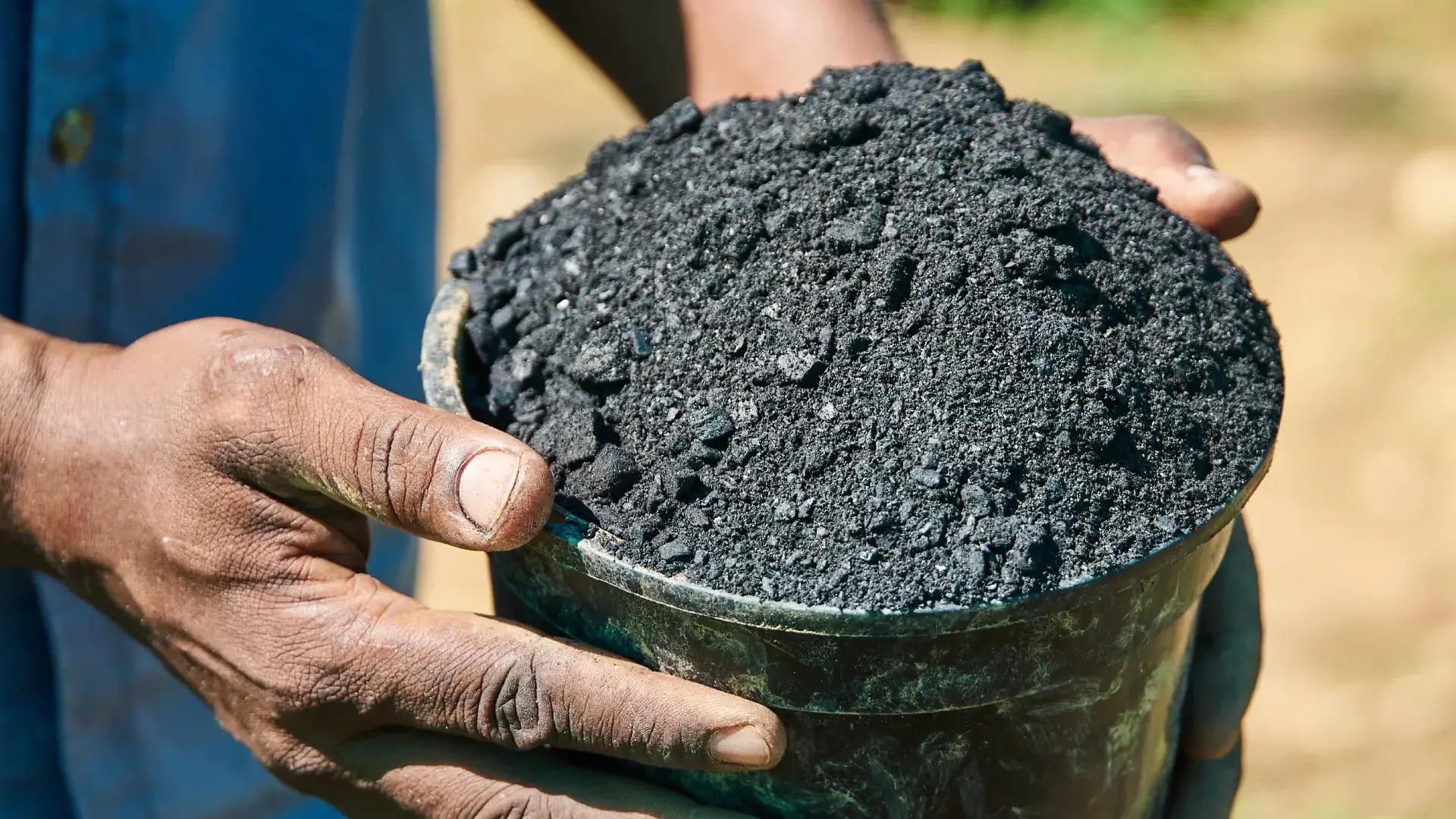
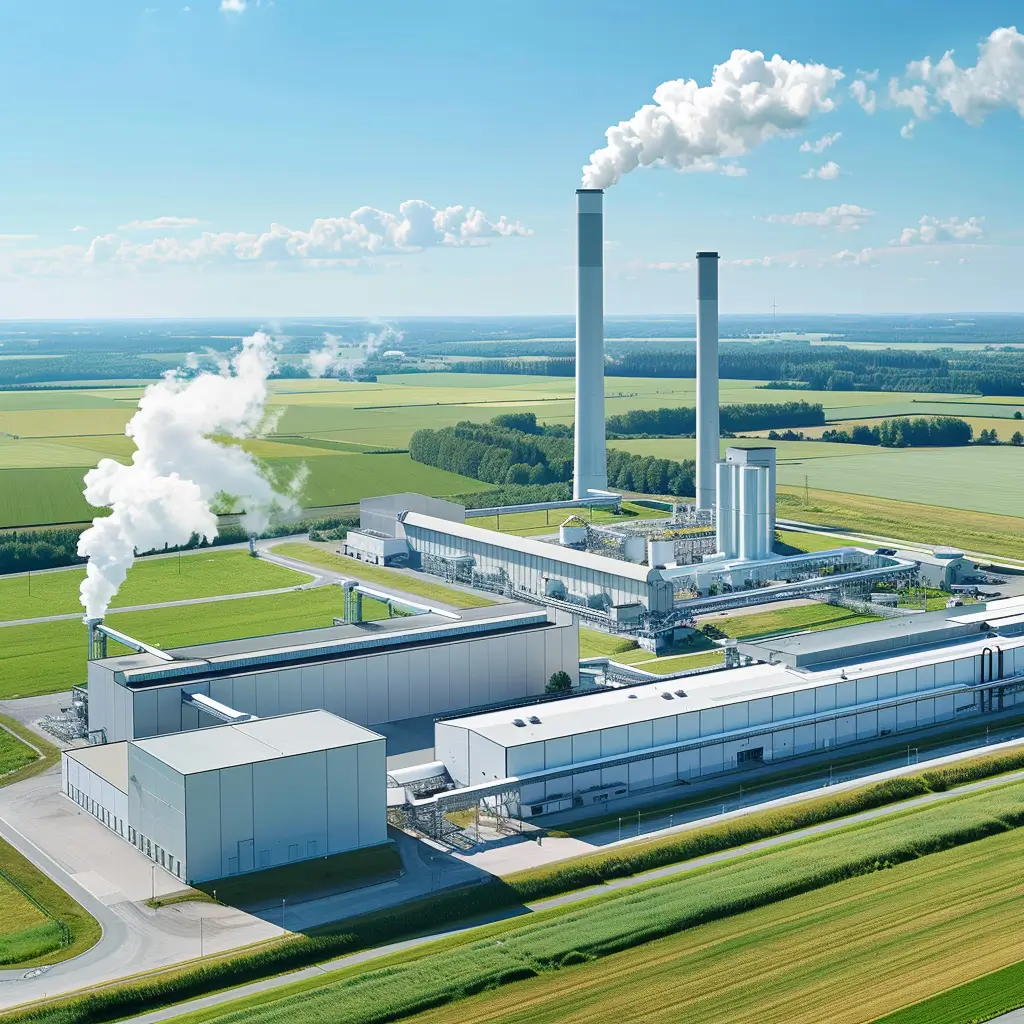
Biochar: a available, scalable and affordable way to store CO₂ long-term
How does CO₂ and Biochar work
Biochar is made from biomass residues from agriculture. Normally, these residues are composted, burned, or left to decompose. In all cases, the captured CO₂ returns to the atmosphere.
By processing these residual streams into Biochar, a stable solid form of carbon, the CO₂ is kept out of the atmosphere for hundreds to thousands of years. This makes Biochar a form of carbon removal.
Biochar is produced by pyrolyzing biomass, heating it without oxygen. Because there is no oxygen (O₂) present, the carbon atoms (C) cannot be converted into CO₂, resulting in a stable form of carbon that resembles charcoal. The biochar is then returned to the soil, which improves soil quality.
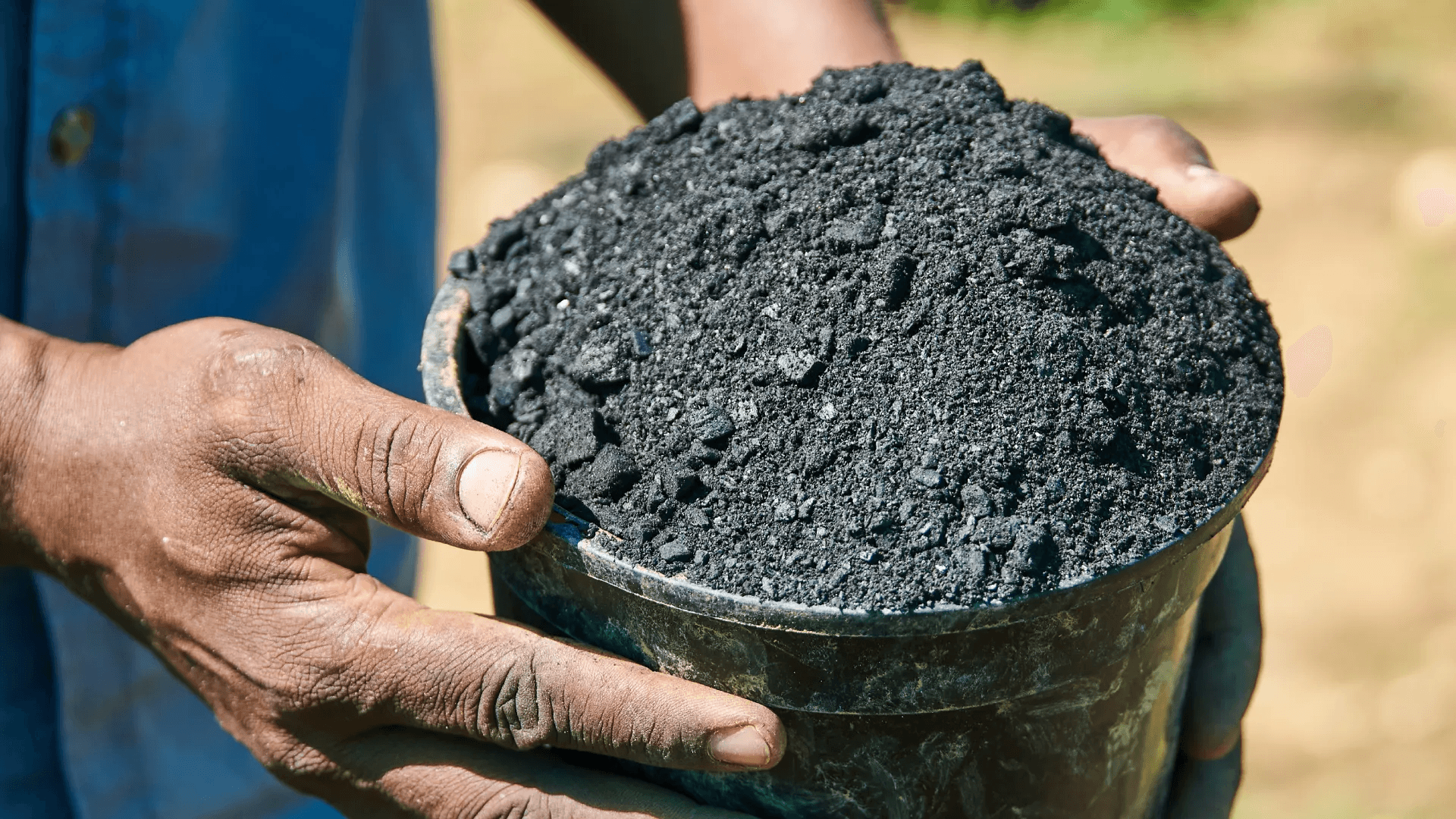
In addition to CO₂ removal, Biochar improves soil structure and better retains water and nutrients. It stimulates healthy soil life and generates additional income for farmers.
In this way, biochar contributes to more fertile soil, reduces the need for fertilizers, and helps make agriculture more productive and sustainable.



Long-term
Carbon Storage
Biochar captures carbon from the atmosphere in solid form, prevents CO₂ emissions, and helps achieve net-negative emissions, a powerful tool for climate mitigation.

Soil health & Crop productivity
By improving soil structure, nutrient retention, and microbial activity, biochar increases crop yield and reduces the need for fertilizers, especially in degraded or sandy soils.

More sustainable & less fertilizer needed
The porous structure of biochar helps the soil retain moisture, protects crops against drought, and optimizes water use. As a result, less fertilizer is needed.

Climate Financing
Because biochar is mainly produced in the Global South, smallholder farmers who produce it receive a fair payment for their work. So, it's peer-to-peer climate financing!

Impact through collaboration
with reliable partners
The Collective has started. We need everyone for this. Both consumers who offset their CO2 and providers of high-quality CO2 removal projects. Are you the party that can remove CO2 in a scalable and effective way? Let us know!